
A well-run business does not always announce itself loudly. Often, you see it in quiet details: clear fire exits, trained staff, updated records, safe storage, and risks spotted early.
For shops, restaurants, salons, offices, warehouses, takeaways, and food premises, Southall health and safety is more than compliance. The structure protects people. It supports continuity in trade, public trust, and a local business’s hard-earned reputation.
1. Begin With the Risk Assessment
Every safe workplace starts with a clear view of risk. A risk assessment should identify hazards.
It should explain who harm could affect.
It should describe the controls already in place.
It should also show what we still need to address.
In Southall premises, common risks include slips and trips, unsafe stock storage, and manual handling.
Other risks include blocked routes, poor cleaning routines, electrical faults, and fire hazards. The document should reflect the real workplace, not a copied template that ignores daily conditions.
2. Inspect Fire Exits Before an Inspector Does
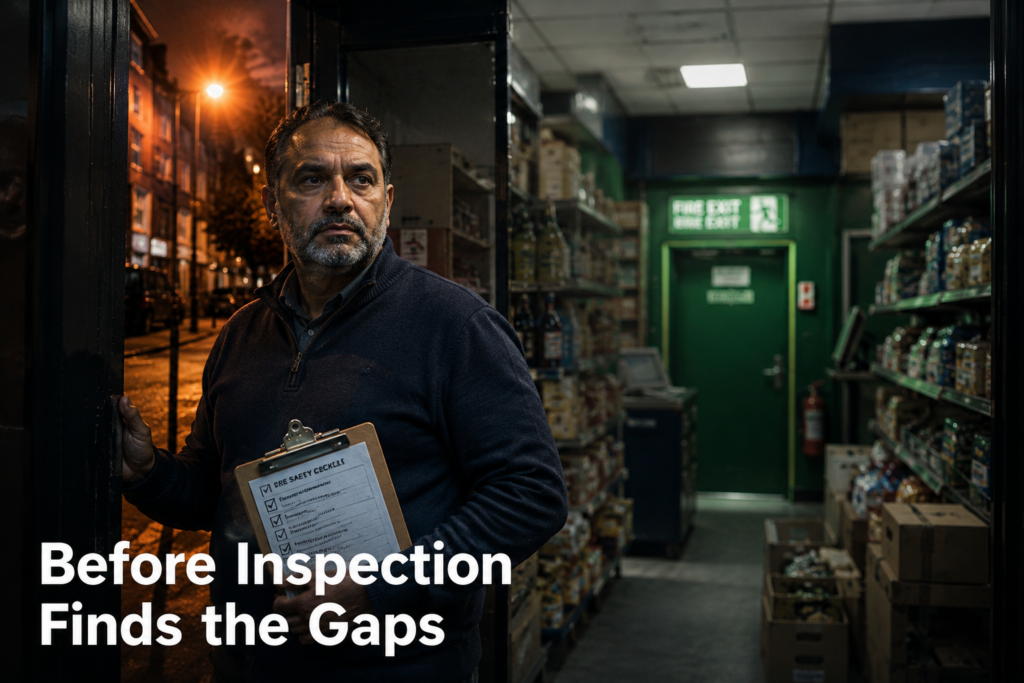
Fire safety is one of the fastest ways to judge whether a business is under control. Escape routes should stay clear.
Signs should be easy to see. Alarms should be easy to understand. Staff should know how to respond at once.
In busy local businesses, deliveries, packaging, and stock can slowly creep into emergency routes. That small obstruction may seem harmless during a normal day. During an inspection, it tells a different story.
3. Turn Staff Training Into Daily Behaviour
Training is where paperwork becomes practice. Staff should know how to lift safely.
They should report hazards and manage spills. They must follow fire procedures and support first aid. They should apply food hygiene controls when needed.
Strong training is key to health and safety at Southall. It shows that risk management is not only for owners. Not only for managers. Everyone across the workplace understands it.
4. Make First Aid Clear and Accessible
First aid should never feel improvised. A suitable first aid kit should be available. An appointed person should be in place.
Display clear notices. Staff should get simple instructions. These steps help staff deal with injuries or sudden illness calmly.
A quiet office, commercial kitchen, warehouse, and retail shop may all need different levels of provision. The right arrangement depends on the risks inside the premises.
5. Treat Near Misses as Warnings
A near miss is not a lucky escape to forget. Evidence exists.
Accident and near-miss records show patterns. These include repeated slips near an entrance. They also include lifting injuries during deliveries.
They can also show equipment that keeps causing concern. Good records show that the business notices risks, responds properly, and improves before harm occurs.
6. Control Food Safety With Discipline
For restaurants, cafés, takeaways, grocers, sweet shops, butchers, and caterers, workplace safety and food hygiene work together. Cleaning records, temperature checks, allergen information, pest control, waste control, and safe storage all influence compliance and customer confidence.
7. Keep Evidence Ready
A reliable Southall health and safety file should include risk assessments and fire safety records.
It should also include staff training certificates and accident logs.
Add first aid arrangements, cleaning records, and equipment checks.
Include food safety documents where relevant.
The aim is not excessive paperwork. The aim is proof. If an inspector asks how you control risks, your documents should support what they already see in the workplace.
FAQs
I run a small business. Do I still need a risk assessment?
Yes. Even a small workplace can have fire risks, lifting hazards, slips, electrical issues, or customer safety concerns. The assessment should match the size and risk level of the business.
What would an inspector notice first?
Usually, the visible issues include blocked exits and unsafe storage. They also include poor housekeeping and missing records. You may see damaged equipment. Some staff may be unsure about basic procedures.
How often should Southall health and safety checks be reviewed?
Review them whenever staff, layout, equipment, opening hours, work processes, or risk levels change.