

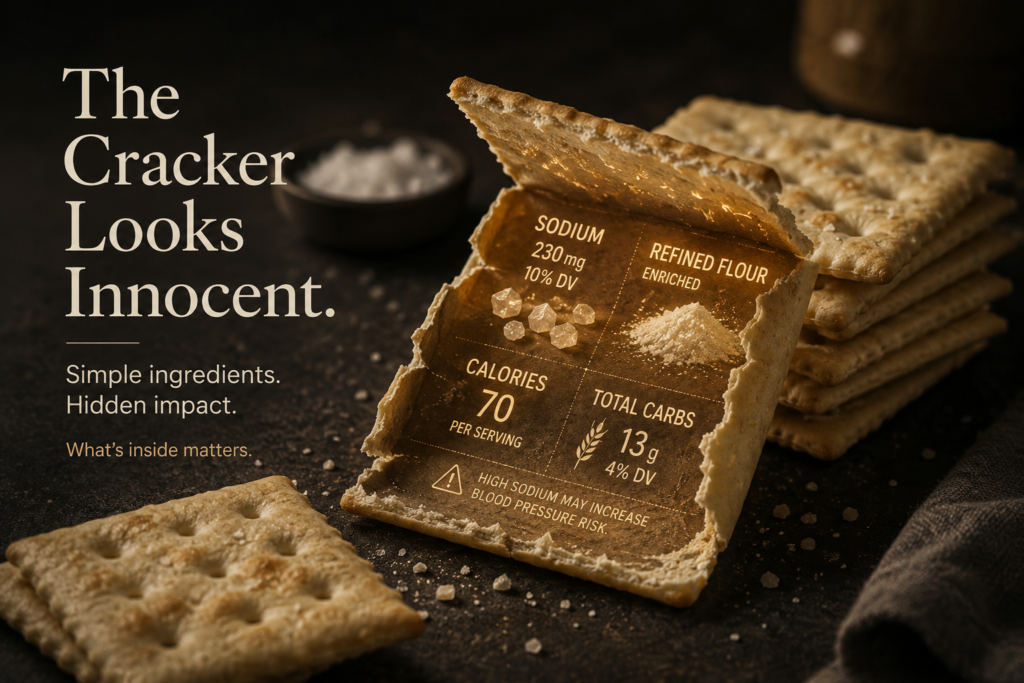
Saltines look simple, light, and harmless. That is exactly why people often underestimate them. The real saltines nutritional value story is not about fear. Knowing what these plain crackers give your body, what they lack, and how fast a small serving becomes a bigger snack matters.
Manufacturers usually make saltine crackers from refined wheat flour, oil, salt, leavening agents, and yeast. Many ingredient labels list terms like unbleached enriched flour and wheat flour.
They may also list niacin, reduced iron, and thiamine mononitrate (vitamin B1).
Other common items include riboflavin (vitamin B2) and folic acid.
Some labels list soybean oil or canola oil.
They may also include palm oil.
Sea salt or salt is also common.
You may see malted barley flour, baking soda, and yeast too. That ingredient list tells a bigger story.
Saltines are mostly refined carbs.
They have added vitamins from enriched flour.
They also have a little fat and noticeable sodium.
Saltines Nutritional Value at a Glance
A typical serving of saltine crackers is about five crackers. Depending on the brand, that serving often contains around 60–70 calories, mostly from carbohydrates. Saltines usually provide minimal fiber and protein, which means they may not keep you full for long.
This is why saltines nutritional value depends heavily on portion size. Five crackers may feel small. Ten or fifteen crackers can disappear quickly, especially with soup, cheese, peanut butter, or dips.
The FDA explains that Daily Value (DV) shows how much a nutrient in one serving adds to your daily diet. Nutrition labels usually use a 2,000–calorie daily diet as their basis. Many labels include the phrase “day is used for general nutrition advice” because each person has different daily needs.
Calories, Carbs, and Fiber in Saltines
The main nutritional feature of saltines is carbohydrates. They are not low-carb or keto-friendly. They are light, but they are still refined crackers.
Saltines can work as a quick carbohydrate when you need something bland or easy to digest. However, because they are low in fiber, they do not offer the same fullness as whole grain crackers, oats, beans, fruit, or vegetables.
That does not make saltines “bad.” It means you should use them with intention. If your goal is weight control, blood sugar balance, or longer fullness, pair saltines with protein or fiber.
Good pairings include:
Saltines with tuna
Saltines with boiled eggs
Saltines with hummus
Saltines with cottage cheese
Saltines with vegetable soup
Saltines with peanut butter in a measured amount
Sodium: The Hidden Issue in Saltines
Sodium is often the most important part of the saltines nutritional value conversation. A few crackers may not seem like much, but sodium can add fast. This can happen if you eat several servings.
It can also happen if you pair them with salty foods. Salty foods include canned soup, deli meat, processed cheese, and packaged dips.
The FDA lists the Daily Value for sodium as less than 2,300 mg per day. That makes label reading important, especially if you already watch your sodium intake.
This is where the phrase “a serving of food contributes” becomes important. One serving of crackers contributes to a daily sodium total. Two or three servings contribute more. Saltines are not always the problem by themselves; the full meal pattern matters.
Are Saltines Healthy?
Saltines can fit into a healthy diet, but they are not a highly nutritious food. They are useful because they are simple, shelf-stable, mild, and easy to pair with other foods. They are limited because they are low in fiber, low in protein, and often moderate in sodium.
Saltines may be helpful when you need bland food during nausea or stomach discomfort. They may also work well with soup. But as a daily snack, plain saltines alone are not the strongest choice.
A better way to think about saltines nutritional value is this: saltines are a base, not a complete snack. Add protein, fiber, or healthy fat to make them more balanced.
Regular vs Low-Sodium vs Whole Wheat Saltines
Regular saltines are best for classic taste and soup pairing. Low-sodium saltines may be better to reduce sodium. Whole wheat saltines may offer slightly more fiber, depending on the brand.
Always compare labels. Look at calories, sodium, fiber, protein, and ingredients. A cracker that sounds healthier is not always better unless the nutrition panel proves it.
For deeper nutrition checking, USDA FoodData Central is a useful resource for comparing nutrient data across foods.
Smart Ways to Eat Saltines
The healthiest way to eat saltines is to control the portion and add nutrition around them. Instead of eating from the sleeve, put a serving on a plate. Add tuna, eggs, hummus, avocado, cottage cheese, or vegetables.
This changes the snack from refined crackers alone into something more filling and useful.
FAQ
What is the saltines nutritional value?
Saltines nutritional value mainly comes from refined carbohydrates, small amounts of fat and protein, and sodium. They are usually low in sugar but also low in fiber.
Are saltine crackers good for weight loss?
They can fit into a weight-loss plan if portioned carefully, but plain saltines are not very filling. Pair them with protein for better satiety.
Are saltines high in sodium?
They can contribute meaningful sodium, especially if you eat more than one serving or pair them with salty foods.
Are saltines good for an upset stomach?
Saltines are often used as a bland food because they are dry, mild, and easy to tolerate.
Are whole wheat saltines better?
Whole wheat saltines may be better because they have more fiber. Still, check the sodium, calories, and ingredients