

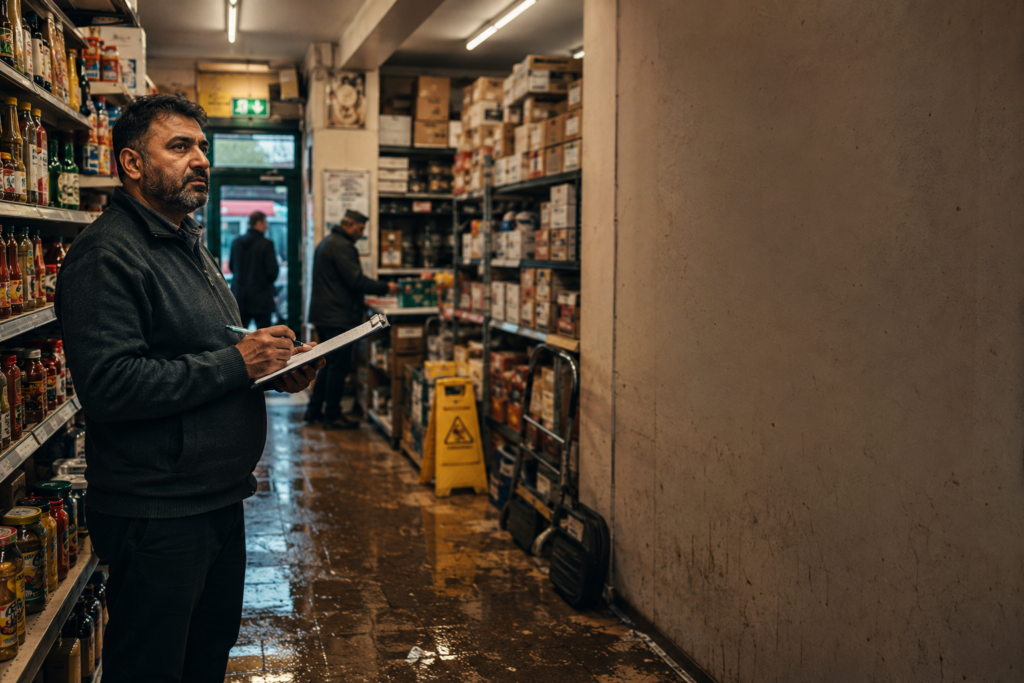
Southall health and safety is one of those things many business owners only think about when something feels urgent. A visit. A complaint.
An accident. A staff member got hurt. A fire exit suddenly noticed for all the wrong reasons.
But safety does not begin at the moment of panic. It begins much earlier, in the quiet details of everyday business.
The floor near the entrance is wet. A stockroom shelf is overloaded. An escape route is blocked.
A staff member lifts boxes without training. The kitchen team rushes through a busy evening service.
For shops, restaurants, warehouses, and offices, a strong Southall health and safety plan is not just paperwork.
It also matters for landlords, food businesses, and community spaces. It protects people.
It protects income. It protects reputation. In a busy local area, customers, staff, visitors, delivery drivers, and contractors share the same space. That protection matters every day.
What Southall Health and Safety Really Means
Southall health and safety means looking closely at your workplace. Ask a simple but powerful question. What could go wrong here? What have we done to prevent it?
The Health and Safety Executive says employers must protect workers and others. They must find hazards, assess risks, and take steps to remove or control them. You can read the official guidance here: HSE risk assessment guidance.
In real life, this may include fire safety and first aid. It may also include food hygiene and staff training.
Keep accident records and follow cleaning routines. Make sure electrical safety rules are in place. Use safe manual handling and safe storage. Have clear emergency procedures.
It is not about creating a folder that nobody opens. It is about building a workplace where people know what to do before risk turns into damage.
Why Southall Health and Safety Cannot Be an Afterthought
Southall is not a quiet business village. Active, crowded, commercial, and constantly moving. Food premises, retail shops, warehouses, offices, industrial units, high streets, community buildings, and shared properties exist. All operate close to one another.
That means one weak safety habit can affect more than one person.
A blocked exit can put staff and customers at risk.
A slippery floor can become an injury claim.
Poor storage can turn a stockroom into a hazard.
A missing training record can become a serious problem during an inspection.
Poor Southall health and safety does not only create legal risk. It can damage trust.
Customers notice when a place feels careless. Staff notice when someone treats their safety casually. Inspectors notice when documents do not match the reality of the workplace.
Ealing Council has previously reported enforcement action against a Southall business after inspectors found dangerous working conditions. You can view the local case here: Ealing Council health and safety case.
The Safety Checks Every Local Business Should Have
A strong Southall health and safety checklist should start with the basics, but the basics must be done properly.
Your business should have:
- A workplace risk assessment
- A written health and safety policy if you have five or more employees
- Clear fire exits and escape routes
- A suitable fire risk assessment
- First-aid arrangements
- Staff training records
- Accident and near-miss reporting
- Regular safety reviews
- Maintenance and inspection records
- A competent person responsible for health and safety
Fire safety deserves special attention. GOV.UK says the responsible person must identify fire hazards.
They must identify people at risk.
They must reduce risks.
They must record their findings.
They must prepare an emergency plan.
They must provide training.
They must review the assessment often. Read the official guidance here: GOV.UK fire risk assessment guidance.
Shops, Food Businesses, Warehouses, and Offices: Different Risks, Same Duty
Every business in Southall has its own rhythm. A shop does not carry the same risks as a warehouse.
A takeaway does not work like an office. A landlord has different duties from a café owner. But the responsibility is the same: risks must be noticed, controlled, and reviewed.
For shops, Southall health and safety should focus on clear walkways and safe shelving. It should also cover wet-floor controls, customer safety, and electrical safety. Safe deliveries matter, and fire exits must stay clear, even during busy hours.
For restaurants, cafés, takeaways, and food shops, safety covers the kitchen, counter, storage areas, and customer spaces. Ealing Council says food operators must make sure food is safe and properly labelled. They must also protect staff and the public from business hazards. Read more here: Ealing food business guidance.
For warehouses and storage units, the risks are often bigger and heavier. These include racking, loading areas, vehicles, manual handling, stock movement, packaging, fire load, and staff supervision.
For offices, the risks may feel quieter, but they are still real. Do not ignore poor workstation setup, trailing cables, stress, fire procedures, lone working, or first-aid planning.
When Professional Help Becomes the Safer Choice
Some business owners can manage simple risks themselves. Others need support because the workplace is more complex, higher risk, or already under pressure.
You may need professional help if your business lacks a risk assessment or written policy. Fire safety records may be unclear. There may be recent accidents or gaps in staff training. You may also have an upcoming inspection.
A good consultant should not simply hand you a generic document. They should walk through the premises and spot real hazards.
They should rank urgent risks and explain what matters most.
They should help you build a system your staff can follow.
For local support, visit Health and Safety Consultant Southall or read more about Fire Risk Assessment Southall.
Questions Southall Business Owners Quietly Ask
Do I really need a risk assessment if my business is small?
Yes. If people work in or visit your premises, risks still exist. A small shop, takeaway, office, or storage unit can still have fire hazards. It may also have slip risks, manual handling issues, electrical problems, and first-aid needs.
What happens if I only fix things after someone complains?
That is a dangerous way to run a business. People often file complaints after damaged trust. Finding the problem before a customer, staff member, inspector, or insurer finds it for you is much safer.
Is fire safety really that important for a small local business?
Yes. Fire risk does not depend only on business size. Stock, packaging, electrical gear, cooking appliances, blocked exits, and weak emergency plans can cause serious danger. Even small premises are at risk.
How often should I review Southall health and safety records?
Review them whenever something changes: new staff, new equipment, new layout, new process, accident, near miss, complaint, or inspection. Even without major changes, regular reviews help stop small issues from becoming serious.