

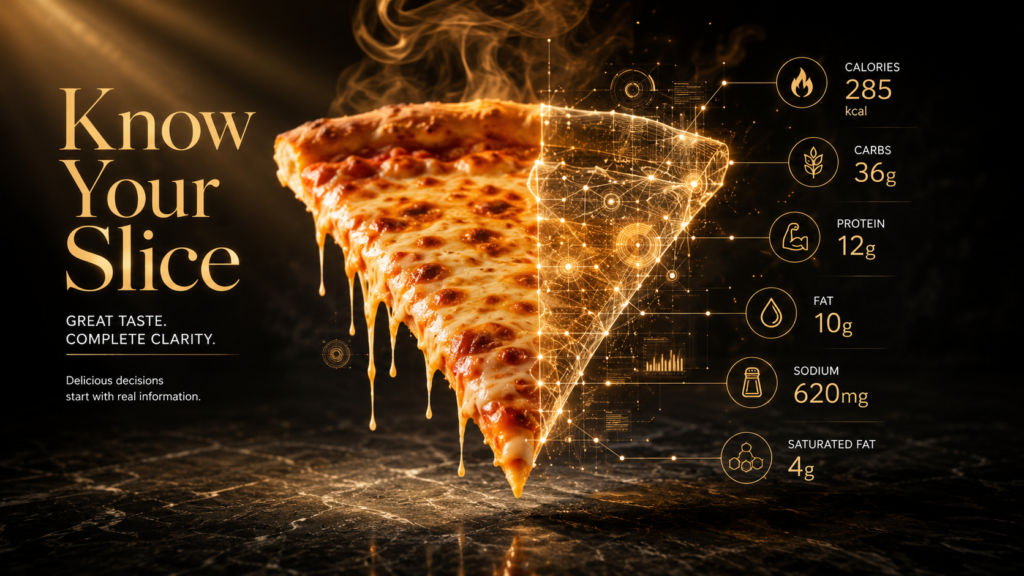
Nutritional information for a slice of pizza is something people usually search for after two moments.
They search right before eating pizza, or right after they already ate it. And suddenly that warm, cheesy slice feels less like comfort food and more like a question.
How many calories are in this?
Is it too much?
Can it still fit into my day?
The answer is not as dramatic as most people fear. A regular slice of pizza, especially cheese pizza, often sits around 250 to 300 calories. But pizza is sneaky. People may call both a thin-crust slice and a deep-dish pepperoni slice “one slice.”
But nutritionally, they are vastly different.
Nutritional Information Slice of Pizza: The Numbers Behind the Bite
A typical slice of pizza may contain:
- Calories: 250–300 calories
- Carbohydrates: 30–40g
- Protein: 10–13g
- Total fat: 9–12g
- Saturated fat: 4–6g
- Sodium: 500–700mg
These nutrition facts are useful, but they are not universal. A homemade slice, frozen pizza, Pizza Hut slice, and local pizzeria slice can look almost identical.
Yet they can have widely different pizza calories.
That is the tricky part. Your eyes see a slice of pizza. Your body receives the crust type, the cheese, the oil, the sauce, the toppings, and the actual portion size.
Image suggestion: Add a pizza nutrition chart with this alt text: nutritional information slice of pizza calorie chart.
Why Pizza Calories Can Change So Fast
The word “slice” sounds simple. It feels measurable. But it is not.
A small thin crust slice may be light, crisp, and moderate. A large deep dish slice can carry more dough, more cheese, more sauce, and more oil before you even think about toppings. Add pepperoni, sausage, or extra cheese, and the calorie count climbs quietly.
The biggest factors are:
- Pizza size
- Slice size
- Crust type
- Cheese amount
- Meat toppings
- Oil and sauce
- Stuffed crust or deep dish base
For deeper support, internally link to pizza calories and thin crust vs deep dish pizza.
Cheese Pizza Nutrition: The Classic Starting Point
Cheese pizza is the baseline. Crust, tomato sauce, mozzarella, heat, and that familiar pull of melted cheese.
A slice of cheese pizza gives you carbs, protein, fat, calcium, sodium, and energy. This food is not empty. But it is also not automatically light food. The cheese adds protein and calcium, but it also adds saturated fat and sodium.
One slice can fit easily into a balanced day. Two slices can still work. The trouble usually begins when the meal grows without you noticing.
A better plate is simple: one or two slices of cheese pizza with salad, vegetables, or a protein-rich side. Same comfort. Better balance.
Pepperoni Pizza Nutrition: The Flavor Comes With a Cost
Pepperoni pizza tastes bold for a reason. It is salty, fatty, rich, and deeply satisfying.
But compared with plain cheese pizza, pepperoni pizza usually brings more calories, more sodium, and more saturated fat. Pepperoni adds some protein, yes, but it also adds processed meat and extra salt.
That does not mean you need to avoid it completely. It means the rest of the meal should be smarter. One pepperoni slice with salad is different from three slices with soda, ranch dip, and breadsticks.
For better topping choices, internally link to healthy pizza toppings.
Thin Crust, Regular Crust, and Deep Dish
Crust type changes the whole nutrition story.
Thin crust usually has fewer calories and fewer carbs because there is less dough. If you are watching pizza calories, carbs, or portion size, thin crust is usually the cleaner choice.
Regular crust sits in the middle. It gives the classic pizza bite without becoming as heavy as deep dish.
Deep dish is richer and denser. It often carries more dough, more cheese, more sauce, and more oil. Treat a deep dish slice more like a full meal than a light snack.
Is a Slice of Pizza Actually Healthy?
A slice of pizza is not automatically unhealthy. It can give you energy, protein, calcium, and real satisfaction. But it can also bring refined carbs, saturated fat, sodium, and extra calories.
Pizza feels more balanced with thin crust, vegetable toppings, moderate cheese, and lean protein.
Choose water instead of soda. It becomes heavier when you add stuffed crust, extra cheese, processed meats, creamy dips, and oversized portions.
The point is not guilt. Awareness. Once you understand the nutritional information slice of pizza, the choice feels calmer.
What One Slice Means for Weight Loss
If you are losing weight, pizza does not have to disappear.
A slice around 300 calories can fit into many weight-loss plans. The real issue is the full meal and your total intake for the day. One slice is manageable. Three slices, soda, dips, and sides can change the math fast.
Choose thin crust. Eat slowly. Add vegetables. Skip extra cheese when it is not worth it. Drink water. For more support, link to your calorie deficit guide.
FAQ: Questions People Actually Have About Pizza Nutrition
How many calories are in one slice of pizza?
Most regular slices have around 250 to 300 calories. Thin crust may be lower, while deep dish, extra cheese, and pepperoni pizza are usually higher.
Is thin crust pizza truly better?
For calories and carbs, usually yes. Thin crust contains less dough, so it often makes the slice lighter.
Is cheese pizza healthier than pepperoni pizza?
Most of the time, yes. Cheese pizza is usually lower in sodium and saturated fat than pepperoni pizza.
Can I eat pizza while dieting?
Yes. Pizza can fit into a diet when portions, toppings, and total daily calories are managed.