

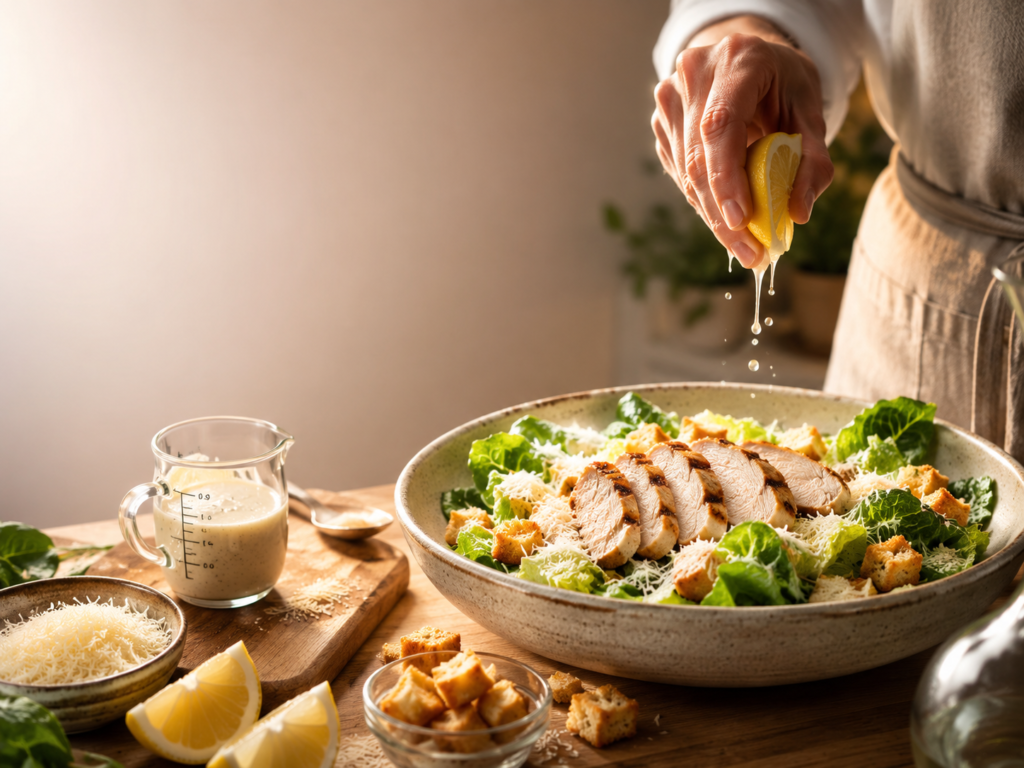
Caesar salad has a reputation for being light, clean and sensible. Then the dressing arrives.
A small bowl of crisp romaine lettuce, a little Parmesan cheese, and one spoonful of dressing can fit into a balanced meal. Add oversized croutons, fried chicken, extra cheese, and several heavy pours of dressing.
Then that harmless-looking salad starts acting more like a restaurant entrée.
The nutritional value of a Caesar salad depends less on the lettuce and more on everything layered over it. The real story is in the portions.
Caesar Salad Nutrition at a Glance
A classic homemade Caesar salad uses three cups of romaine and two tablespoons of dressing.
It also includes Parmesan and a small portion of croutons.
It may contain:
NutrientEstimated amountCalories280–350Protein7–10 gCarbohydrates14–20 gFat21–27 gFiber3–4 gSodium600–900 mg
These numbers are estimates. The recipe, dressing brand and serving size can shift them quickly.
For a more accurate calculation, compare each ingredient using USDA FoodData Central’s romaine lettuce search.
Also use the USDA data for grilled chicken breast.
Quick answer: Caesar salad can be nutritious. But heavy dressing and toppings can add many calories, sodium, and saturated fat. The bowl may contain more than it seems.
Suggested image placement: Below the nutrition table
File name: caesar-salad-ingredients.webp
Alt attribute: Classic Caesar salad with romaine lettuce, Parmesan cheese, croutons and dressing
Where the Calories Quietly Creep In
The lettuce is not the problem. It brings crunch, freshness and minimal calories. The heavier ingredients do most of the nutritional work, for better and worse.
Caesar Dressing Carries the Most Weight
Traditional Caesar dressing often contains oil, anchovies, garlic, mustard, egg yolk and lemon juice. That combination creates the creamy texture and sharp, salty flavor people expect.
It also concentrates calories.
Two tablespoons may add about 150 calories. A casual pour can double that before anyone notices. No one in recorded history has accurately measured dressing while holding a bottle over a salad.
Some store bought dressings also contain sugar, starch or xanthan gum. The dressing uses xanthan gum to thicken and prevent separation. Its presence alone does not make a product unhealthy. The full label matters more than one unfamiliar ingredient.
Parmesan Brings More Than Flavor
Parmesan adds protein, calcium and the sharp, savory finish that makes the salad feel complete. It also contributes sodium and saturated fat.
Finely grated cheese spreads more evenly than thick shavings. That means a smaller amount can still reach almost every bite. This is more satisfying than finding one large, solid lump of cheese and twelve empty leaves.
Croutons Change the Carb Count
Croutons add most of the carbohydrates in a traditional Caesar salad. They may also contain oil and salt, so the calories rise faster than their small size suggests.
A light handful is usually enough for texture. Once croutons cover the bowl like gravel, they are no longer a garnish.
Chicken Turns a Side Into a Meal
A three- to four-ounce chicken breast may add roughly 25 to 30 grams of protein. Choosing grilled chicken instead of breaded or fried chicken usually keeps the calorie and fat content lower.
The protein also makes the salad more filling, which matters if it should replace lunch rather than decorate it.
So, Is Caesar Salad Actually Healthy?
It can be.
Romaine provides water, fiber, folate and vitamins A and K. Chicken adds protein. Parmesan supplies calcium. The dressing brings flavor and fat, which can make the meal more satisfying.
The tension lies in sodium and total fat intake.
The FDA sets 20 grams as the daily value (DV) for saturated fat.
It also sets 2,300 milligrams as the DV for sodium on a 2,000-calorie diet. You can learn how to interpret these numbers in the FDA guide to the Nutrition Facts label.
A useful rule when reading labels is:
- 5% DV or less is considered low.
- People consider 20% DV or more high.
A large restaurant Caesar salad uses up a substantial portion of both limits before you even discuss dessert.
Eating too much saturated fat may increase LDL cholesterol, and higher LDL cholesterol links to a higher risk of heart disease. The goal is not to fear the dressing. It is to notice how much is actually in the bowl.
Suggested image placement: After the health section
File name: caesar-salad-portion-comparison.webp
Alt attribute: Caesar salad calorie comparison showing light and heavy dressing portions
A Better Caesar Salad Without Ruining It
A healthier Caesar salad does not need to taste like wet cardboard. A few practical changes are enough.
- Measure one or two tablespoons of dressing.
- Choose grilled chicken rather than fried chicken.
- Start with a generous romaine base.
- Add tomatoes, cucumber or peppers for more variety.
- Use a smaller amount of finely grated Parmesan.
- Keep the croutons to a light handful.
- Add lemon juice, garlic or black pepper for stronger flavor.
- Compare bottled dressings for sodium, calories and saturated fat.
The point is not to strip away every ingredient that makes Caesar salad enjoyable. It is to keep those ingredients in proportion.
Internal link: How to Read a Nutrition Facts Label
Internal link: Healthy High-Protein Lunch Ideas
Questions People Usually Ask Before Ordering
How many calories are in a Caesar salad?
A homemade side salad usually contains around 280 to 350 calories. A large chicken Caesar salad may reach 500 to 800 calories or more.
Can Caesar salad work for weight loss?
Yes, provided the dressing, cheese and croutons are controlled. Adding lean protein may also help the meal feel more satisfying.
Is Caesar salad low in carbohydrates?
It can be. Most carbohydrates come from croutons, breaded chicken and added sugar in some dressings.
What adds the most fat?
The dressing usually contributes the most because oil is often its main ingredient.
Is chicken Caesar salad enough for lunch?
It can be when it includes a substantial amount of romaine, enough grilled chicken and a sensible dressing portion.