

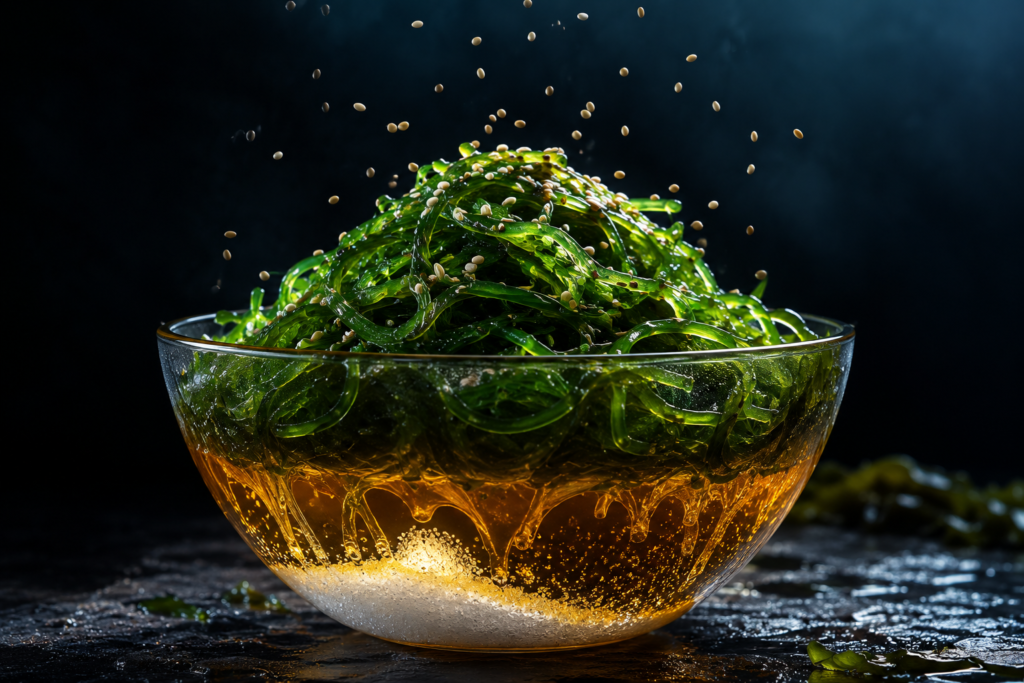
Seaweed salad calories nutrition can be surprisingly difficult to pin down.
At first glance, the dish seems simple: glossy green strands, a few sesame seeds, and a light dressing. It looks fresh, crisp, and almost weightless. Yet what you mix into the bowl can shift the calorie count considerably.
Plain wakame is naturally low in calories. Prepared seaweed salad is another story. Sesame oil, sugar, syrup, soy-based seasoning, sesame seeds, and excess dressing can quietly raise the final number.
For most prepared versions, a useful estimate is:
- 70 to 100 calories per 100 grams
- 73 to 126 calories per cup
- 70 to 120 calories in a standard restaurant side
The most accurate figure will always come from the product label, restaurant nutrition guide, or the recipe used.
Seaweed Salad Calories Nutrition at a Glance
The portion in front of you matters just as much as the recipe.
Serving size Estimated calories1 tablespoon5–81 ounce or 28g20–30100g prepared seaweed salad70–1001 cup73–126Standard restaurant side70–120
These figures are best treated as realistic ranges rather than fixed values. A lightly dressed homemade salad may sit near the lower end. A sweeter commercial version containing more sesame oil may land much higher.
The visual difference can be almost impossible to spot.
That is why two bowls that look identical may carry vastly different nutrition profiles.
What Is Actually in Seaweed Salad?
Most Japanese-style seaweed salad begins with wakame, an edible seaweed also found in soups and noodle dishes.
When making the salad at home, you soak dried wakame in water until it softens and expands. A small handful can become a surprisingly generous portion once rehydrated.
The dressed salad may also contain:
- Rice vinegar
- Sesame oil
- Soy sauce or tamari
- Sugar, honey, or syrup
- Sesame seeds
- Chili
- Agar
- Cucumber
- Salt
- Flavor enhancers
- Food coloring
This is where the calorie story changes.
Wakame itself is light. The dressing often makes the biggest difference between a 70-calorie serving and one over 120 calories.
For a simple preparation method, see this wakame salad recipe from Serious Eats.
Why Seaweed Salad Calories Vary So Much
No universal recipe exists for seaweed salad. Restaurants, food manufacturers, and home cooks all prepare it differently.
Sesame Oil Add Quickly
Sesame oil gives the salad its rich aroma and smooth, glossy texture. It also contains considerably more calories per gram than protein or carbohydrates.
A lightly dressed serving may use only a small amount. Commercial salads often use more to preserve flavor and mouthfeel.
The bowl may still look delicate, but the calorie count rises quietly.
Added Sugar Changes the Nutrition Profile
Sugar softens the sharpness of vinegar and balances the salty, ocean-like taste of wakame.
Some products use modest amounts. Others contain syrup, glucose, honey, or several sweeteners.
The FDA Nutrition Facts guidance explains how to identify added sugars and compare serving sizes accurately.
Serving Sizes Are Inconsistent
“One serving” may mean 50 grams on one package and 100 grams on another.
A restaurant side can be even harder to judge. You may place the seaweed loosely in the bowl or compress it beneath the surface. Dressing can also settle at the bottom.
Comparing calories per 100 grams is usually more reliable than comparing calories per serving.
How Many Calories Are in One Cup?
One cup of prepared seaweed salad generally contains around 73 to 126 calories.
That wide range exists because a cup measures volume, not weight.
A loosely filled cup may contain mostly seaweed. A tightly packed cup may hold much more salad, along with extra dressing and sesame seeds.
For more accurate tracking, weigh the portion and use this formula:
Calories eaten = portion weight ÷ listed serving weight × listed calories
For example, if a salad contains 80 calories per 100 grams and your portion weighs 150 grams:
150 ÷ 100 × 80 = 120 calories
A kitchen scale is not glamorous, but it removes most of the guesswork.
Seaweed Salad Calories Nutrition per 100 Grams
A typical 100-gram serving of prepared seaweed salad may provide:
Nutrient Typical amountCalories70–100Carbohydrates10–14gSugar3–8gFiberUp to 5gFat1–5gProtein1–3g
The final values depend on how much dressing, sugar, oil, agar, and seaweed the recipe contains.
Seaweed salad is usually low to moderate in calories, but it is not necessarily low in sugar or sodium. That distinction matters, especially when someone is choosing the dish for health reasons.
Calories describe only one part of the food.
Restaurant Seaweed Salad Calories
A typical restaurant side contains roughly 70 to 120 calories.
Larger or more heavily dressed portions may contain 120 to 180 calories.
Restaurant estimates are less precise because:
- The salad may arrive premade.
- The restaurant may not know the supplier’s exact recipe.
- Portion sizes can change between servings.
- Dressing may collect beneath the seaweed.
- Nutrition information may not be available.
When a restaurant does not share nutrition facts, it is safer to log a realistic mid-range estimate.
Do not pick the lowest number in a tracking app.
The lowest number is not automatically the most accurate one.
Is Seaweed Salad Healthy?
Seaweed salad makes a nutritious side dish, particularly when you dress it lightly.
Usually, it is lower in calories than fried starters, creamy salads, or large sushi rolls. Wakame can also contribute iodine and other minerals.
However, prepared versions may contain high amounts of sodium, sugar, or oil.
The healthier choice is often the version with:
- Less added sugar
- Less sesame oil
- Lower sodium
- A clear serving size
- A shorter ingredient list
Sodium, Blood Pressure, and Seaweed Salad
Seaweed salad can contain considerable sodium.
The sodium may come from:
- The seaweed itself
- Added salt
- Soy sauce
- Seasoning blends
- Commercial dressings
- Preservatives
Regularly eating too much sodium may raise blood pressure, especially in people sensitive to sodium or with heart risks.
The FDA uses the following guide:
- 5% Daily Value or less is considered low.
- Nutrition guidelines consider 20% Daily Value or more high.
You can read more in the FDA’s sodium and diet guidance.
People on a doctor-prescribed low-sodium diet should check the product label, not a general online estimate.
What About Iodine?
Wakame and other edible seaweeds can contain high amounts of iodine.
Iodine helps the thyroid produce hormones that support metabolism, growth, and other essential functions. Adults generally need around 150 micrograms per day.
The difficulty is that iodine levels vary widely between seaweed species, growing locations, and products.
A serving may provide a moderate amount. Another may contain far more.
The National Institutes of Health iodine fact sheet explains that seaweed iodine content can vary dramatically.
This does not mean you must avoid seaweed salad. It means you should not treat larger servings as nutritionally unlimited.
People with thyroid conditions, iodine restrictions, or related medical concerns should seek personalized guidance.
Can Seaweed Salad Support Weight Loss?
Seaweed salad can fit comfortably into a weight-loss plan.
A moderate serving offers strong flavor and satisfying texture without requiring hundreds of calories. It may be a more calorie-conscious choice than fried appetizers or sauces made with mayonnaise.
Still, seaweed salad is not a complete meal.
Most versions contain only 1 to 3 grams of protein per 100 grams. Without protein or other filling foods, hunger may return quickly.
Pair it with:
- Tofu or tempeh
- Edamame
- Eggs
- Fish
- Chicken
- Extra vegetables
- A measured portion of rice
This creates a more balanced meal rather than relying on a small bowl of salad to provide lasting fullness.
[Internal link: High-Protein Low-Calorie Meal Ideas]
How to Choose a Lighter Seaweed Salad
A few label checks can reveal more than the color or packaging.
Compare Equal Weights
Look at calories per 100 grams rather than calories per serving. This prevents smaller serving sizes from appearing healthier than they are.
Check the Ingredient Order
Ingredients are normally listed by weight. If syrup, sugar, or oil appears near the beginning, the salad may be more heavily dressed.
Review Sodium
Check both the sodium amount and its percentage of Daily Value.
Measure the Real Portion
The label only works when the amount you eat matches the amount printed on the package.
Drain Excess Dressing
Some sugar, sodium, and oil remain in the liquid at the bottom of the container. Leaving part of that dressing behind may reduce the amount consumed.
Making a Lighter Salad With Dried Wakame
A homemade version gives you control over the ingredients that influence the calorie count.
Start by soaking dried wakame until tender. Drain well. Then mix it with rice vinegar, grated ginger, sliced cucumber, and a measured amount of sesame oil.
For a lighter dressing:
- Use more vinegar and less oil.
- Reduce or omit added sugar.
- Choose lower-sodium soy sauce.
- Add cucumber or radish for volume.
- Use sesame seeds sparingly.
The result remains crisp, savory, and refreshing without becoming unnecessarily heavy.
Suggested image alt text:
dried wakame for seaweed salad calories nutrition
Questions Readers Commonly Ask
Why does seaweed salad have more calories than plain seaweed?
Most of the extra calories come from sesame oil, sugar, sweet dressing, and sesame seeds, not the wakame itself.
Is seaweed salad low in carbohydrates?
Prepared versions commonly contain 10 to 14 grams of carbohydrates per 100 grams. Some of those carbohydrates may come from added sugar.
Can seaweed salad be keto-friendly?
A small portion may fit some low-carb diets, but sweetened store-bought versions can use much of a strict daily carb limit.
Is seaweed salad safe to eat every day?
Small servings may fit a balanced diet, but iodine and sodium levels vary. Daily consumption may not suit people managing thyroid conditions, blood pressure, or sodium intake.
Is restaurant seaweed salad usually homemade?
Not always. Many restaurants buy ready-made salad. This means the exact amount of oil, sugar, sodium, and coloring may be unknown.